


Editors: A. Artyukhov, A. Navolokina – Kyiv, International European University, 2025. – 52 pages.
ISBN: 978-617-95381-5-5
Artificial Intelligence: (Un)Limited Opportunities in Education is an innovative publication that explores the role of artificial intelligence (AI) in modern education. The book analyzes the potential and challenges of integrating AI into the learning process, focusing on its impact on teaching methods, academic integrity, personalized learning, and the future of the teaching profession.
One of the book’s unique features is the use of augmented reality (AR) technology, providing readers with an interactive experience through the “Ulab AR” mobile application. By incorporating visual content via interactive illustrations, diagrams, and infographics, the book serves both as a scientific-methodological resource and as a practical tool for educators, students, and anyone interested in digital education.
The book advocates for the thoughtful and ethical use of AI in education, emphasizing that emerging technologies should complement teachers rather than replace them, thereby expanding opportunities for personalized learning and creative thinking.
❗️So far the book is only in Ukrainian.

PhD in Engineering, Doctor of Economics, Associate Professor, Senior Researcher. Member of the National Agency for Higher Education Quality Assurance, Chair of the Agency’s Ethics Committee. A member of the Presidium of the public organization “Innovative University” and several international organizations, including the European Network for Academic Integrity (ENAI). Recipient of the Tricia Bertram Gallant Award for Outstanding Service (International Center for Academic Integrity) and the ENAI Exemplary Activism Award (European Network for Academic Integrity).

PhD in Economics, Associate Professor, President of the International European University. Corresponding Member of the Academy of Economic Sciences of Ukraine, member of the Ukrainian Association of Teachers and Researchers of European Integration, and several international organizations, including the European Network for Academic Integrity (ENAI).
This book is a collection of insights and experiences from researchers and educators who recognize that integrating artificial intelligence into education is a process to be guided, not resisted. Instead of a traditional textbook, this illustrated workbook offers space for experimentation and personal reflection, breaking away from rigid academic formats.
Both teachers and students benefit from visual materials—whether they are diagrams, infographics, or sketches. These visual elements enhance comprehension, making information more accessible, structured, and easier to retain. Unlike conventional learning materials, this book invites readers to become co-authors, adding their own notes, comments, and ideas to the illustrations.
Each copy will be unique; every reader interprets and engages with the content differently. This personalized experience will help shape individual and collective perspectives on the role of AI in education. The book serves as a “contour map,” ready to be “colored in,” with the emotions and insights of each reader.
We Invite You to Share Your Feedback on the Book! 📖✨
Dear colleagues, students, and everyone interested in the role of artificial intelligence in education!
The authors are committed to improving and expanding the book “Artificial Intelligence: (Un)Limited Opportunities in Education”, considering your feedback, comments, and suggestions. Your insights will help make future editions even more valuable and practical!
📢 We invite you to share your impressions!
✔️ What did you like about the book?
✔️ Which topics, in your opinion, require further exploration?
✔️ What ideas or practical cases would you like to see in future editions?
💡 Submit your feedback via the link and help us enhance this publication!
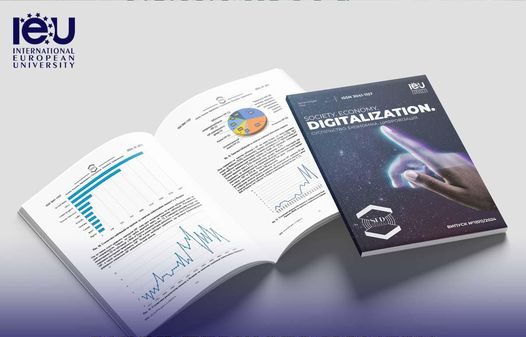
Dear scientists!
We invite you to publish scientific articles in collections of scientific papers of International European University!
 |
Topical sections of the Collection:: ♦ Mechanisms and technologies of public and business administration in solving social problems ♦ Areas and prospects for the development of financial and credit relations and taxation in the context of global challenges ♦ Accounting, analysis and control in the system of improving the efficiency and security of social and economic transformations ♦ Information systems and technologies as determinants of the digital economy and the establishment of social and economic ecosystems ♦ Interdisciplinary development of social relations and the social and humanitarian sector under the influence of digitalization Frequency: 3 times per year. Languages of publication: English, Ukrainian. |
Publication requirements and conditions are available on the collection website: https://sed.europeanmedicaluniversity.com/
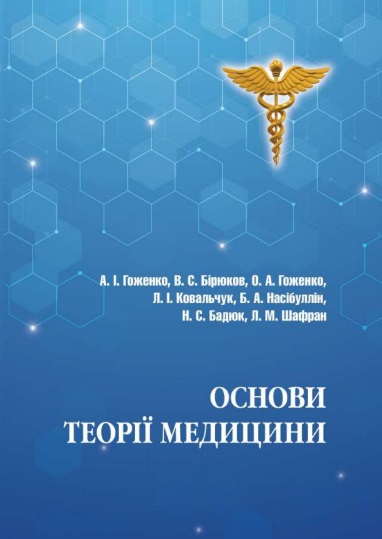 |
Fundamentals of the theory of medicine: monograph / A. I. Gozhenko, V. S. Biryukov, O. A. Gozhenko, L. I. Kovalchuk, B. A. Nasibullin, N. S. Badyuk, L. M. Shafran; under general ed. A. I. Gozhenka. Odesa: Phoenix, 2024. 248 p. The monograph presents modern ideas about the theory of medicine. The book can be useful for those who want to have a general idea about medicine, especially when choosing a profession and in the process of learning, as well as for those who are engaged in science and medical practice. |
 |
Remyga Yu.S., Priymak N.V., Trushkina N.V. , Rynkevich N.S. (2024) Digital transformation of organizational culture of enterprises: monograph. Kyiv: International European University. 250 p. The monograph theoretically substantiates the expediency of using an integrated approach to managing organizational changes at enterprises. Developed scientific principles of improving the organizational mechanism of managing the transformation of the organizational culture of enterprises in the conditions of digitalization. Developed theoretical the methodological principles of organizational support for the transformation of the organizational culture of enterprises, in particular, have been improved: a methodological approach to evaluation and selection an effective direction of organizational culture transformation, which involves determining the most important criteria and their systematization into groups (adaptability, mission, consistency, employee involvement); the organizational mechanism for the formation of a strategy for managing the transformation of organizational culture as a conceptual model of long-term measures within the framework of the concept of relationship marketing, which should be used to achieve strategic goals of the enterprise on the basis of the introduction of self-development programs and continuous improvement of the professional qualities of personnel with the help of digital technologies; a comprehensive approach to the digital transformation of organizational culture as a symbiosis and constant interrelationship of influencing factors, constituent elements, digital competencies.
|
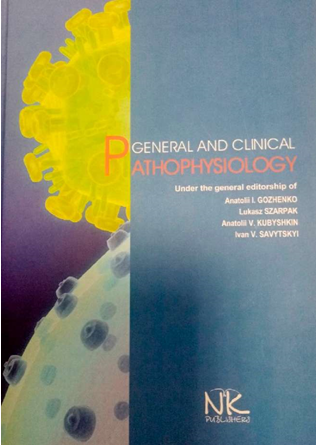 |
General and Clinical Pathophysiology /Under the general editorship of Anatolii I. Gozhenko, Lukasz Szarpak, Anatolii V. Kubyshkin, Ivan V. Savytskyi. (2021). 5th edition. Vinnytsia : Nova Knyha. 656 p. The proposed Pathophysiology Textbook for English Language Learners contains information selected from the Pathophysiology Program for Medical Students. The study guide is written to help students in independent classes on pathophysiology and to understand the material on the development of pathological processes. The book presents new materials of domestic and foreign pathological physiology. The study guide is recommended for the training of medical students at all faculties of medical universities. It can also be offered for use in the training of doctors, interns, postgraduates, and can be useful to doctors of all specialties at any stage of postgraduate education. |
More books and scientific publications of the University are available on the publishing platform IEU_OPEN_MONOGRAPHY.

